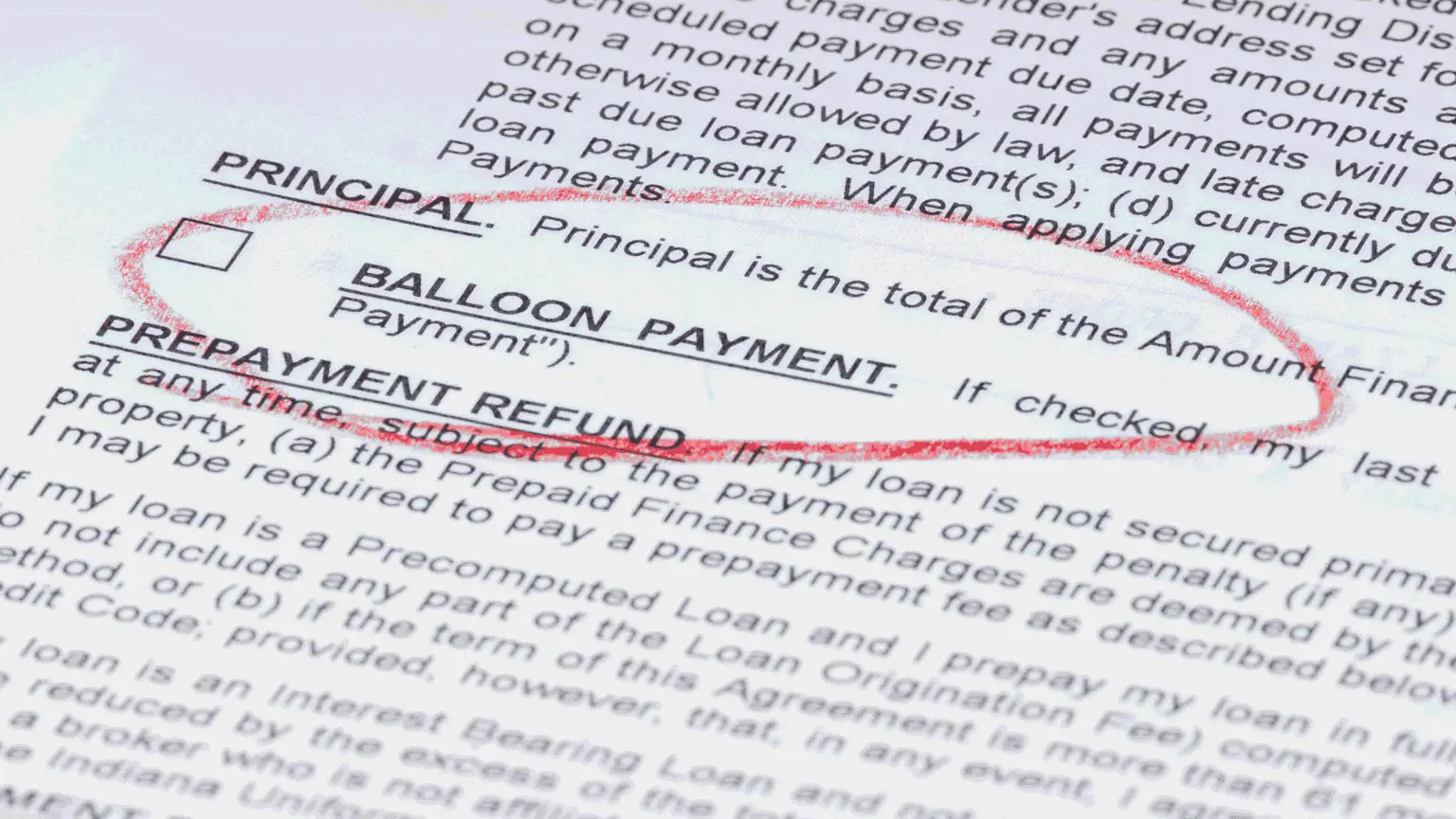
When financing a car, you will likely come across terms that sound quite different from a standard bank loan. One of the most common concepts in motor finance is balloon payment. While it can make driving a newer vehicle significantly more affordable on a monthly basis, understanding how it works is essential to avoid any unexpected financial surprises down the road.
What Is a Balloon Payment?
In automotive finance, a balloon payment is a large, lump-sum payment that might be due at the end of an agreement. It is most commonly found in Personal Contract Purchase (PCP) agreements and Balanced Payments / Lease Purchase deals.
Unlike a traditional personal loan, where your monthly installments gradually pay off both the car’s full value and interest until the balance reaches zero, a balloon agreement defers a substantial portion of the car’s principal balance until the end of the contract term. Because a large chunk of the debt is set aside, your regular monthly payments are dramatically lower.
How Balloon Payments Work in Car Finance
To understand how a balloon payment operates in practice, it helps to look at the lifecycle of a typical PCP or Lease Purchase deal:
- Setting the Guaranteed Minimum Future Value (GMFV): At the start of the agreement, the finance company estimates what the car will be worth at the end of your term (usually 2 to 4 years). This figure is based on your agreed annual mileage and the vehicle’s expected depreciation. In PCP agreements, this predicted value forms your balloon payment and acts as a financial safety net called the GMFV.
- Enjoying Lower Monthly Instalments: During the agreement, you only pay off the difference between the car’s initial price and its predicted future value (plus interest). This keeps your monthly outgoings manageable.
- Reaching the End of the Agreement: When your contract matures, the balloon payment falls due. In a standard PCP deal, you generally have three choices:
- Pay the balloon (Option to Purchase): Settle the balloon payment (plus any nominal option-to-purchase fee) to keep the car outright. You can pay this using cash or by refinancing the remaining amount into a new loan.
- Hand the car back: If the vehicle is within the agreed mileage and in good condition (allowing for fair wear and tear), you can return it to the lender with nothing further to pay.
- Part-exchange the vehicle: If the car is worth more on the market than the balloon payment, you hold equity. You can trade the car in, use the trade-in value to pay off the balloon payment, and apply any remaining equity as a deposit on your next car.
How a Balloon Payment Is Calculated
Calculating a balloon payment involves forecasting vehicle depreciation alongside standard loan math. Here is how lenders calculate your final lump sum:
Car’s Purchase Price – Deposit = Total Amount Borrowed
Total Amount Borrowed – Estimated Future Value = Amount Paid via Monthly Instalments
There are a few other factors that lenders can take into account when assessing the car’s worth and therefore what the balloon payment may be:
- Assessing Vehicle Depreciation: Lenders use industry data (such as CAP HPI values) to predict what the vehicle will be worth after 24, 36, or 48 months based on mileage limits (e.g., 10,000 miles per year).
- Setting the Principal Base: If a car costs £30,000 and you put down a £3,000 deposit, you are financing £27,000. Lenders might estimate that after 3 years and 30,000 total miles, the car will be worth £14,000.
- Structuring the Payments: The £14,000 figure becomes your balloon payment. Your 36 monthly installments are calculated to cover only the £13,000 difference (£27,000 minus £14,000), along with interest charges on the entire outstanding debt.
- Finalising the Balance: At month 36, after making your last regular instalment, the remaining balance equals the exact £14,000 balloon payment.
Understanding the term balloon payment before you sign a contract is key for everyone. Although many lenders don’t require this, reading the fine print in your contract is key to understanding what that value could potentially be to allow you to decide if you can afford it.