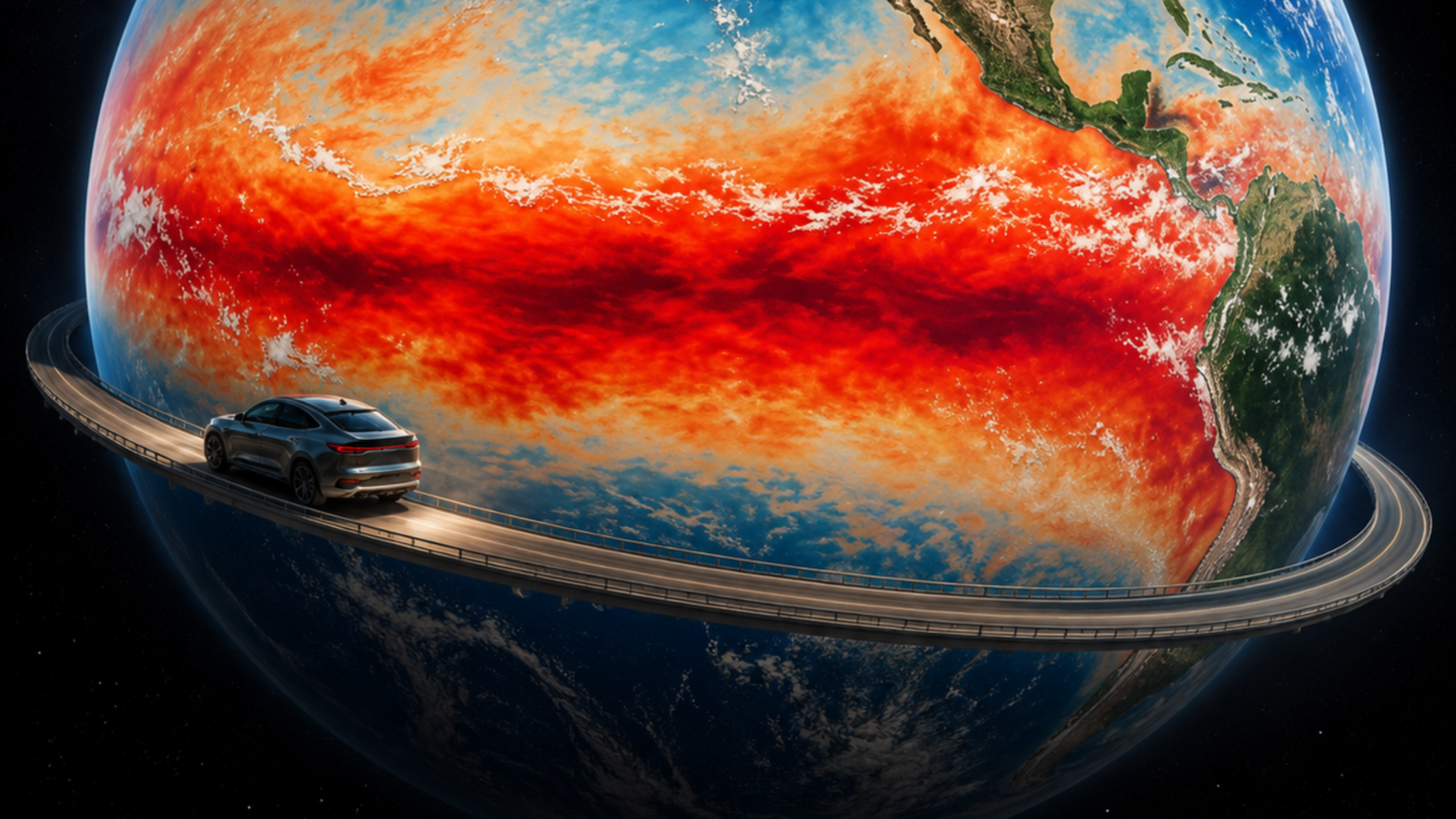
Anyone who has watched the news this year or even flicked through social media would have seen the term ‘Super El Nino’ once or twice, you may have even thanked it for the lovely weather we’ve had this Summer up and down the UK.
Whilst the hot summer has been a nice change from normal British weather, an El Niño doesn’t just bring us warmer summers; it’s going to bring us a mixed winter that can directly threaten the asphalt beneath our tyres. Here is a clear look at what a Super El Niño actually is, how it wreaks havoc on transport infrastructure, and how drivers can protect their vehicles.
What is a Super El Niño?
To understand a Super El Niño, it helps to start with the standard El Niño-Southern Oscillation (ENSO) cycle. In normal years, trade winds blow west across the tropical Pacific Ocean, pushing warm surface water towards Asia and Australasia. During an El Niño event, these trade winds weaken, or even reverse, allowing that massive reservoir of warm water to drift back east towards the Americas.
A Super El Niño occurs when ocean temperatures in the equatorial Pacific spike dramatically above average, typically by 2C or more over an extended period. This massive release of oceanic heat acts like a turbocharger for global weather systems, shifting jet streams and disrupting rainfall patterns across the globe.
But what does that actually mean:
- Torrential rainfall and atmospheric rivers: Dropping weeks’ worth of rain in mere hours.
- Severe storm systems: Bringing damaging gales and localised hail.
- Record heatwaves and drought: Baking landmasses in summer and drying out soils.
The Impact of Extreme Weather on Road Infrastructure
Modern road networks are engineered to handle seasonal changes, but they aren’t designed for sustained, relentless climate shocks. When a Super El Niño triggers intense weather patterns, the physical groundwork supporting our transport network takes a beating.
| Weather Driven | Primary Mechanism | Infrastructure Impact |
| Torrential Rain | Saturated sub-base & drainage | Rapid pothole growth, structural collapse |
| Mudslides | Hydro-geological instability | Road closures, buried carriageways |
| Heat Extremes | Thermal expansion & rutting | Asphalt bleeding, compromised bridge joints |
Flash Flooding and Sub-Base Erosion
When heavy rainfall hits, standard highway drainage systems get overwhelmed fast. Standing water on carriageways is a nuisance, but the real structural damage happens beneath the surface. Water seeps into minor cracks in the asphalt, saturating the aggregate base below. As heavy goods vehicles (HGVs) drive over these soaked roads, the hydraulic pressure forces water and fine particles out through the cracks, creating empty voids beneath the road surface.
Accelerated Pothole Breakdown
Once those subterranean voids exist, the asphalt above loses its structural support. Add freeze-thaw cycles or continuous traffic pressure, and the road collapses inward, producing the potholes drivers dread. A single season of Super El Niño-driven rainfall can accelerate road degradation by years, turning smooth commuter routes into obstacle courses.
Mudslides and Landslips
In hilly or coastal areas, intense precipitation saturates steep embankments. When soil absorbs more water than it can hold, it loses cohesion. The resulting mudslides can bury major arterial roads in minutes, severing vital supply chains and leaving repair crews with months of stabilisation work.
How Super El Niño Weather Damages Vehicles
We’ve seen the effects of this during the summer with cars overheating, and roads being closed due to wildfires spreading drastically due to the dryer weather. However, that doesn’t mean that just because summer is coming to an end, the effects of the El Niño are too. It isn’t just the highways taking the hit; extreme weather poses a direct, costly threat to the vehicles driving on them.
1. Torrential Rain & Flooding
Water and modern cars simply do not mix. Driving through standing water, or getting caught in a flash flood, can lead to catastrophic failures:
- Hydro-locking the Engine: If water is sucked into the air intake, it enters the combustion chambers. Because liquids cannot be compressed like air, the pistons come to a sudden, violent stop. This instantly bends connecting rods and shatters the engine block, resulting in a write-off.
- Electrical System Fried: Modern cars are computers on wheels. Floodwater corroding wiring harnesses, ECU modules, and floor-mounted sensors leads to permanent electrical glitches that are notoriously difficult—and expensive—to trace and fix.
- Brake Deterioration: Prolonged submersion or constant exposure to heavy road spray accelerates rotor rust, contaminates brake fluid with water, and washes grease out of caliper slider pins.
2. High Winds & Flying Debris
Severe storms bring localised gales that transform ordinary objects into hazards. Flying branches, loose tiles, and airborne grit can strip paintwork, chip windshields, or dent panels. Even worse, falling trees during high-wind events are a leading cause of total-loss vehicle damage in suburban areas.
3. Extreme Temperature Swings
A Super El Niño often brings intense summer heatwaves followed by sudden cold snaps. These dramatic temperature swings put immense mechanical stress on vehicles:
- Tyre Blowouts: Air expands when heated. Driving on hot asphalt when ambient temperatures are high pushes tyre pressures far above normal limits. If a tyre is already slightly under-inflated or damaged, the thermal stress dramatically increases the risk of a high-speed blowout.
- Engine Overheating: Cooling systems work significantly harder during severe heat. Radiators, water pumps, and cooling fans pushed to their limits will expose any underlying weaknesses in your cooling system, leaving you stranded with a cooked head gasket.
How Drivers and Fleet Operators Can Prepare
You can’t control the global weather, but you can change how you prepare for it. Whether you manage a family hatchback or a fleet of commercial vehicles, taking proactive measures pays off.
Essential Driver Checklist
- Never Drive Through Standing Water: If you can’t see the road surface, don’t drive through it. Six inches of water can reach the bottom of most passenger cars, causing loss of control and potential engine intake, while twelve inches can float a car.
- Prioritise Tyire Maintenance: Check tread depths and adjust pressures based on seasonal ambient temperatures. Good tread depth isn’t just about grip; it clears surface water to prevent hydroplaning.
- Upgrade Wiper Blades & Washer Fluid: Replace worn windshield wipers before storm season hits. Keep washer fluid topped up with an all-weather formula to clear heavy road grime.
- Monitor Regional Weather Advisories: Pay attention to Met Office warnings. If an amber or red warning for rain or wind is issued, adjust travel schedules or delay unnecessary trips.
Last but not least, now that we are going from Summer to Autumn/Winter be prepared with your vehicle this winter and drive safely.